
 By India VisaCategories Foods
 Foods You Can Only Find in India: Unique Dishes Every Traveler Should Try
By India VisaCategories Foods 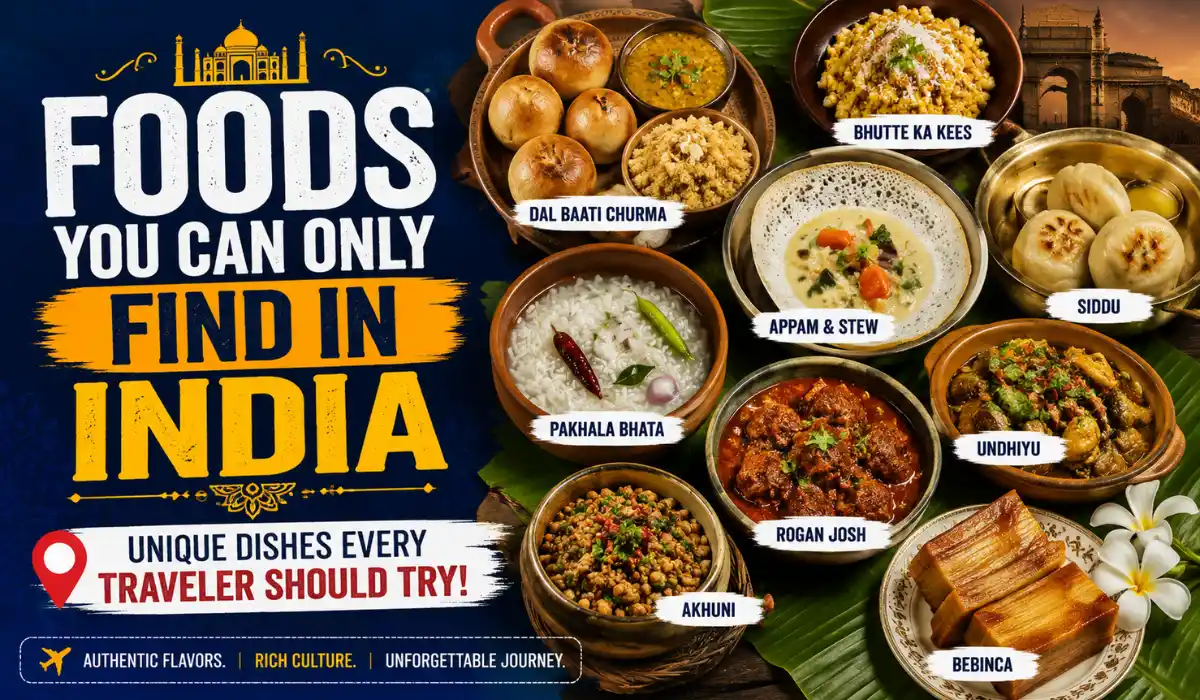
India is one of the world’s most diverse culinary destinations. While dishes like butter chicken, biryani, and samosas are famous globally, there are countless foods you can only find in India that remain relatively unknown outside the country. These unique regional specialties reflect India’s rich history, cultural diversity, and local traditions.
From mountain villages in the Himalayas to coastal towns in the south, every region offers dishes that are deeply rooted in local customs and ingredients. For travelers seeking authentic experiences, tasting these unique foods in India can be just as memorable as visiting famous landmarks.
If you’re planning a culinary journey across India, remember to apply online India visa and prepare your travel documents before departure.
Why India Has So Many Unique Foods
India’s geography, climate, languages, and traditions have shaped thousands of local recipes over centuries.
Factors that contribute to India’s food diversity include:
- Regional ingredients
- Cultural influences
- Traditional cooking methods
- Religious practices
- Historical trade routes
As a result, many traditional Indian foods are difficult to find anywhere else in the world.
1. Dal Baati Churma – Rajasthan
Dal Baati Churma is one of Rajasthan’s most iconic meals.
What Makes It Unique?
The dish consists of:
- Baked wheat balls (Baati)
- Lentil curry (Dal)
- Sweet crushed wheat dessert (Churma)
It reflects the culinary traditions of desert regions where food needed to remain fresh for longer periods.
2. Bamboo Shoot Curry – Northeast India
In states such as Nagaland and Mizoram, bamboo shoots are widely used in cooking.
Why Travelers Love It
- Distinct flavor
- Traditional preparation methods
- Rarely available outside Northeast India
This is one of the most authentic regional foods in India.
3. Appam and Stew – Kerala
Appam paired with vegetable or meat stew is a classic dish from Kerala.
- Soft, fermented rice pancakes
- Mild coconut-based curry
- Popular breakfast and dinner option
This combination showcases the unique culinary identity of southern India.
4. Bhutte Ka Kees – Madhya Pradesh
A lesser-known dish from central India, Bhutte Ka Kees is made from grated corn cooked with spices and milk.
Why It’s Special
- Rarely found outside Madhya Pradesh
- Rich local flavor
- Vegetarian-friendly
It remains one of the hidden gems among famous foods in India.
5. Siddu – Himachal Pradesh
Siddu is a steamed bread popular in the Himalayan region.
What Makes It Unique?
- Prepared using yeast-fermented dough
- Often stuffed with nuts or spices
- Traditionally served with ghee
Visitors to Himachal Pradesh often discover Siddu as part of local mountain cuisine.
6. Undhiyu – Gujarat
Undhiyu is a seasonal vegetable dish deeply connected to Gujarati culture.
Key Features
- Prepared during winter months
- Includes multiple vegetables and spices
- Slow-cooked using traditional techniques
This dish represents the richness of western India’s culinary heritage.
7. Pakhala Bhata – Odisha
A refreshing rice dish popular in eastern India.
Why Locals Love It
- Perfect for hot weather
- Made using fermented rice
- Often served with vegetables and fried sides
It is one of the most distinctive foods you can only find in India.
8. Akhuni – Nagaland
Akhuni is a fermented soybean preparation commonly used in Naga cuisine.
Unique Characteristics
- Strong aroma
- Traditional preparation
- Deep cultural significance
Food enthusiasts often travel specifically to Northeast India to experience dishes like Akhuni.
9. Rogan Josh – Kashmir
Rogan Josh is one of the most famous dishes from northern India.
Highlights
- Rich flavors
- Traditional spices
- Cultural significance
Authentic versions are best experienced in Kashmir itself.
10. Bebinca – Goa
Bebinca is a traditional layered dessert from Goa.
Why It Stands Out
- Multiple layers baked individually
- Portuguese influence
- Popular during festivals
It remains one of the most distinctive sweets found in India.
Exploring Regional Foods in India
One of the best ways to understand India is through its food.
Every region offers something unique:
North India
- Rich curries
- Tandoori dishes
- Bread varieties
South India
- Rice-based dishes
- Coconut flavors
- Seafood specialties
East India
- Fish dishes
- Rice preparations
- Traditional sweets
West India
- Vegetarian specialties
- Spiced snacks
- Festival foods
This diversity makes India one of the most exciting food destinations in the world.
Why Food Tourism in India Is Growing
More international travelers are choosing India for culinary experiences because:
- Food reflects local culture.
- Regional cuisines vary dramatically.
- Authentic dishes are affordable.
- Many recipes cannot be found elsewhere.
For food lovers, India offers an unmatched culinary journey.
Travel Tips for Food Lovers Visiting India
To enjoy your food adventure:
- Explore local markets.
- Try regional specialties.
- Visit family-run restaurants.
- Learn about local ingredients.
- Carry travel insurance.
- Apply online India visa before planning your trip.
Apply India e Visa Online Before Your Culinary Journey
International travelers planning to explore India’s food culture should prepare their travel documents in advance.
Eligible visitors can apply India e visa online before departure and complete the necessary application process electronically.
Early visa preparation allows travelers to focus on enjoying India’s incredible food experiences.
Conclusions
The variety of foods you can only find in India is one of the country’s greatest attractions. From Himalayan breads and fermented delicacies to coastal curries and traditional desserts, each dish offers a glimpse into India’s rich cultural heritage.
Whether you are a passionate foodie or simply curious about local flavors, exploring these unique foods in India can make your journey unforgettable.
Before your trip, ensure your travel documents are ready, apply online India visa, and where eligible, apply India e visa online to begin your culinary adventure across India.