
 By India VisaCategories India Visa
 India Tourist Visa vs eVisa: What’s the Difference in 2026?
By India VisaCategories India Visa 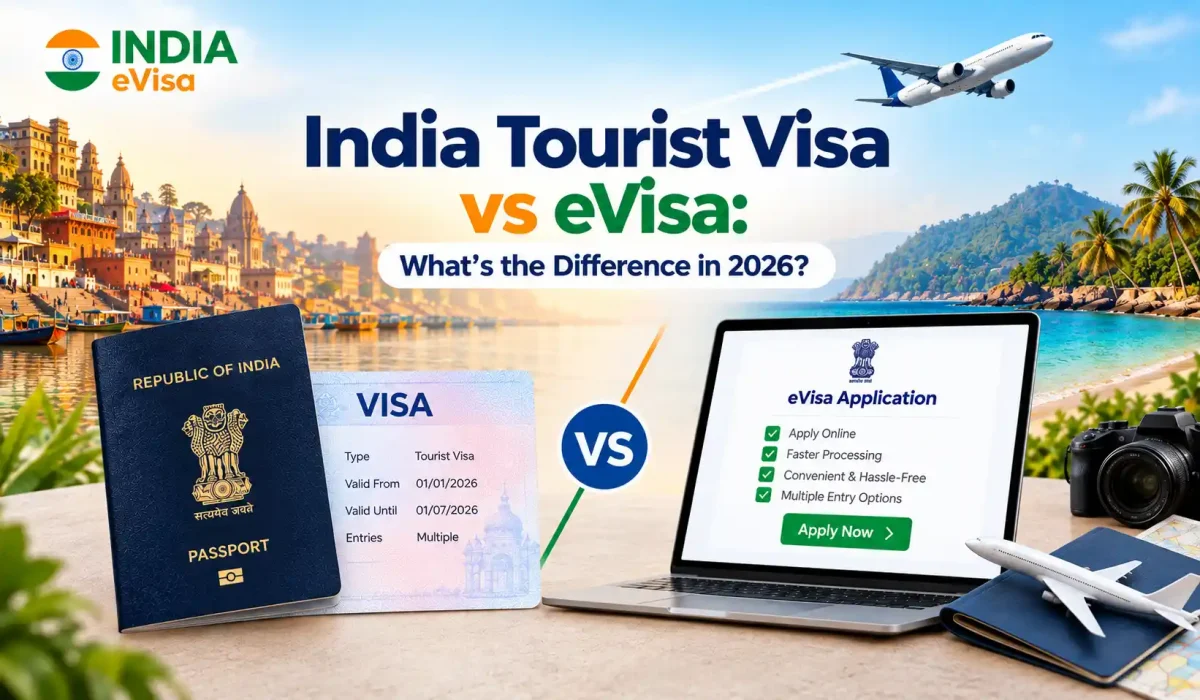
Planning a trip to India but confused about an india tourist visa vs evisa? The main difference is how you apply and how the visa is issued.
For many eligible travelers, the India e-Tourist Visa can be applied for online, while a regular tourist visa follows the traditional application route through an Indian Mission or Post. Here is what you need to know before planning your 2026 trip.
India Tourist Visa vs eVisa: What Is the Difference?
The term India tourist visa describes permission to enter India for tourism, while an eVisa is an electronic visa issued through an online process for eligible travelers.
The Government of India currently provides e-Tourist Visa options for eligible nationalities, including 30-day, 1-year, and 5-year options. The exact validity, entries, and permitted stay depend on the visa selected and the applicant’s nationality.
A regular or traditional tourist visa is different because the application is handled through the Indian Mission/Post route rather than the eVisa system. The official India Visa Online portal lists regular/paper visa applications separately from eVisa applications.
Quick comparison
| Feature | Regular/Traditional Tourist Visa | India e-Tourist Visa |
| Application method | Through Indian Mission/Post | Online |
| Physical visa process | Generally involved | Electronic process |
| Embassy/mission visit | May be required depending on application | Generally not required for the eVisa application |
| Eligibility | Depends on visa rules | Only eligible nationalities and purposes |
| Tourist options | Depends on visa issued | 30-day, 1-year and 5-year options |
| Application documents | Depends on visa and mission | Passport scan, photo and other required documents |
| Approval | Issued through the regular visa process | ETA/eVisa issued electronically |
| Best suited for | Travelers who need or prefer the regular visa route | Eligible travelers visiting for permitted purposes |
The table is a general comparison. Visa rules can vary according to nationality, travel purpose and individual circumstances.
What Is an India e-Tourist Visa in 2026?
An India e-Tourist Visa is an electronic visa for eligible foreign nationals traveling to India for permitted tourism-related purposes.
According to the Government of India, eligible travelers can apply online, upload their photograph and passport information, pay the applicable fee and receive an Electronic Travel Authorization (ETA) by email.
The current e-Tourist Visa options include:
- 30-day e-Tourist Visa
- 1-year e-Tourist Visa
- 5-year e-Tourist Visa
The 30-day option is valid from the first arrival and allows multiple entries within its validity period. The 1-year and 5-year tourist eVisas allow multiple entries, subject to the applicable stay limits and nationality-specific rules.
What Is a Regular Indian Tourist Visa?
A regular Indian tourist visa is the traditional visa route for travelers who need to apply through an Indian Mission/Post.
This route can be relevant when an applicant does not qualify for eVisa or when their circumstances require a regular visa. The Government of India’s visa portal separates regular/paper visa applications from eVisa applications.
The fees and requirements for regular visas can vary according to visa type, duration and the applicant’s circumstances. The official fee information also advises applicants to check with the relevant Indian Mission or Visa Application Centre for applicable charges.
India Tourist Visa vs eVisa: Which One Do You Need?
The answer depends mainly on your nationality, purpose of travel and eligibility.
For example, imagine you are traveling from the USA to India for a holiday in Delhi, Agra and Rajasthan. If you meet the eVisa requirements, an e-Tourist Visa may allow you to complete the application online instead of following the regular visa route.
If you are traveling with a passport or under circumstances that are not eligible for eVisa, you may need to use the regular visa process.
The Government of India states that eVisa is available only to eligible nationalities and specific categories. It also has special restrictions for certain passport holders and travel-document holders.
Who Can Apply for an India eVisa?
Eligibility is not based only on your travel destination. Your passport nationality and travel purpose are important.
For an e-Tourist Visa, permitted purposes include activities such as:
- Recreation and sightseeing
- Casual visits to friends or relatives
- Short-term yoga programmes
- Certain short-term courses
- Certain permitted voluntary activities
The official eVisa rules also require an eligible passport, sufficient passport validity and other travel conditions.
Before applying, check the latest eligibility rules for your nationality rather than assuming that every foreign traveler qualifies.
Documents Needed for an India eVisa
The online application normally requires key documents and information such as:
- A valid passport
- A recent photograph meeting the required specifications
- A scanned passport bio page
- Travel and personal information
- Additional documents where applicable
The Government of India states that the passport should generally have at least six months of validity when applying for an eVisa, with additional requirements applying to the travel document and circumstances.
You can also review the India tourist visa and eVisa requirements before starting your application.
How to Apply for an India eVisa Online
For eligible travelers, the eVisa process is completed online.
Step 1: Check your eligibility
Confirm that your nationality and travel purpose qualify for an India eVisa.
Step 2: Complete the application
Enter your personal, passport and travel details carefully. Your information should match your passport.
Step 3: Upload documents
Provide the required photograph, passport scan and any additional documents requested for your visa category.
Step 4: Pay the applicable fee
eVisa fees are country-specific, and applicable payment or transaction charges may also apply.
Step 5: Receive your ETA
Once approved, your Electronic Travel Authorization is sent to the email address used in your application. You should check that the status shows as granted before traveling.
If you want assistance with the application process, you can also review the India visa online service page.
How Early Should You Apply for an India eVisa?
Do not leave your application until the last moment.
The official Government of India eVisa guidance says eligible applicants can generally apply at least 4 days before arrival, with applications for several eVisa categories available up to 120 days before the proposed arrival date.
However, applying earlier gives you more time to correct an issue or respond if additional information is requested.
For example, if you are flying from the USA to India next month, applying well before your departure date can reduce the risk of a last-minute visa problem.
Important Things to Remember Before Traveling
After receiving your eVisa, check the details carefully.
Remember these points:
- Travel with the passport used for the application.
- Carry a printed copy of your approved ETA.
- Check that your ETA status shows GRANTED.
- Follow the entry conditions attached to your visa.
- Make sure your passport meets the required validity conditions.
- Check whether your planned airport or seaport accepts eVisa entry.
The official eVisa guidance states that eVisa is non-extendable and non-convertible and that travelers should carry their ETA when traveling.
India Tourist Visa vs eVisa: Common Mistakes to Avoid
Many visa problems happen because travelers rush through the application.
Avoid these common mistakes:
- Entering your name differently from your passport
- Uploading unclear documents or photographs
- Choosing the wrong visa category
- Waiting until immediately before departure
- Assuming all nationalities have identical rules
- Booking travel without checking your visa status
Visa rules can change, so always check the current requirements that apply to your passport and travel purpose.
FAQ: India Tourist Visa vs eVisa
Is an India eVisa the same as a tourist visa?
An eVisa can be a tourist visa. The India e-Tourist Visa is an electronic visa issued to eligible travelers for permitted tourism purposes. “Regular tourist visa” generally refers to the traditional visa application route.
Can I apply for an India tourist eVisa online?
Yes, eligible travelers can apply for an India e-Tourist Visa online. You need to meet the nationality and travel-purpose requirements and provide the required information and documents.
How long is an India tourist eVisa valid?
India currently offers 30-day, 1-year and 5-year e-Tourist Visa options. The validity and permitted stay depend on the specific visa and applicable nationality rules.
Do I need to visit an Indian Embassy for an eVisa?
The eVisa application is completed online, so eligible applicants generally do not need to visit an Indian Mission/Post to submit the eVisa application. The regular visa route is separate.
Apply for Your India eVisa
If you are eligible for an India e-Tourist Visa, you can start the application online and prepare your documents before your trip.
Apply now through eVisa Indians and submit your application early so you have time to review your details and receive your travel authorization before departure.