
 By India VisaCategories eArrival Card
 India eVisa vs Visa on Arrival: Which One Should You Choose?
By India VisaCategories eArrival Card 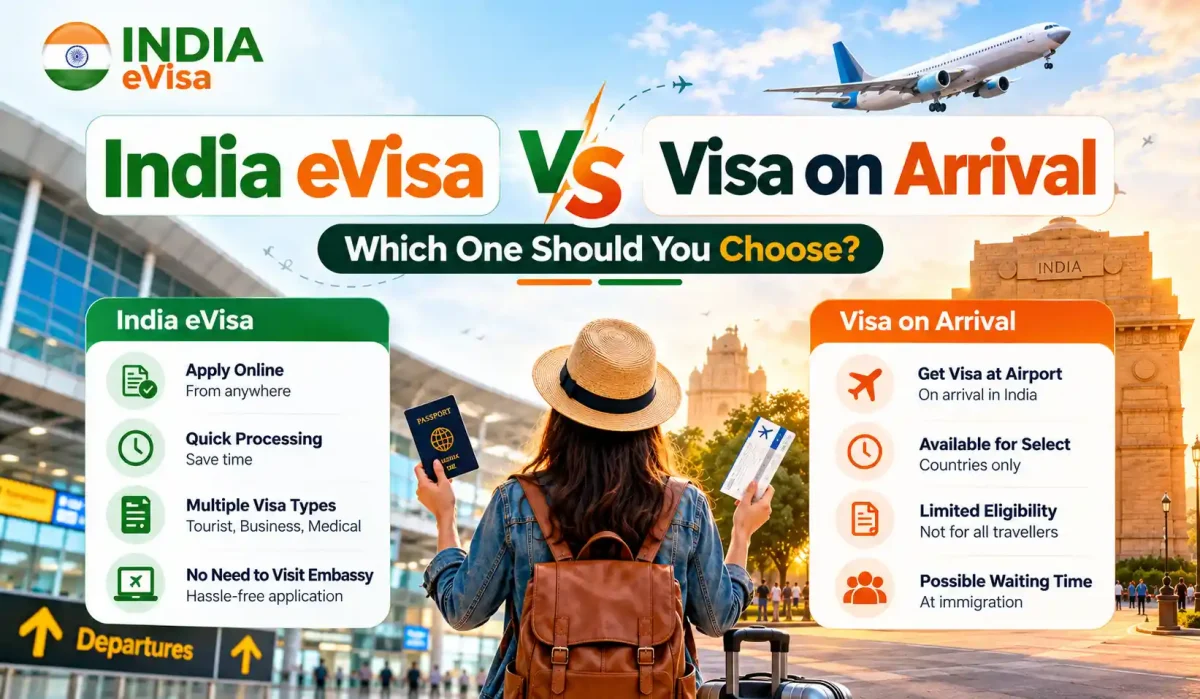
Planning a trip to India but unsure whether you need an eVisa or can get a visa on arrival? The rules are different, and choosing the wrong option could create problems at the airport.
This guide explains e-visa vs visa on arrival India in simple terms, including eligibility, application process, cost, entry points, and practical examples for 2026.
What Is an India eVisa?
An India eVisa is an electronic travel authorization that eligible foreign nationals apply for online before travelling to India.
The application is completed online, including uploading the required documents and paying the applicable fee. Once approved, the Electronic Travel Authorization (ETA) is sent to the applicant by email.
For tourism, eligible travellers can apply for different e-Tourist Visa options, including 30-day, one-year, and five-year visas, depending on the applicable rules and nationality.
You can learn more about the tourist option through the India Tourist Visa page.
How Does the India eVisa Process Work?
The basic process is:
- Complete the online application.
- Upload your passport page and photograph.
- Pay the applicable visa fee online.
- Receive your ETA by email.
- Print the ETA and carry it when travelling.
- Present it at an authorised immigration checkpoint in India.
Eligible applicants should normally apply at least four days before arrival, although the permitted application window and requirements vary by eVisa category.
What Is a Visa on Arrival in India?
A Visa on Arrival (VoA) sounds like an option available to anyone who lands in India without a visa. However, that is not how India’s current system works.
As of 2026, India’s official Visa on Arrival facility is available only to nationals of Japan, South Korea, and certain UAE nationals who have previously obtained an Indian eVisa or regular/paper visa.
For UAE nationals visiting India for the first time, the Indian government advises applying for an eVisa or regular visa before travel.
The facility is also available only at six designated international airports:
- Bengaluru
- Chennai
- Delhi
- Hyderabad
- Kolkata
- Mumbai
Therefore, most international travellers should not assume that they can simply arrive in India and obtain a visa at the airport.
E-Visa vs Visa on Arrival India: Key Differences
Understanding the e-visa vs visa on arrival India difference is easier when you compare the main features.
| Feature | India eVisa | Visa on Arrival |
| Apply before travel | Yes | No, application is made at arrival |
| Who can use it? | Nationals of eligible countries/territories | Nationals of Japan, South Korea and qualifying UAE nationals |
| Online application | Yes | No |
| Advance approval | ETA issued before travel | Granted after arrival, subject to eligibility |
| Entry points | Designated eVisa airports/seaports | Six designated international airports |
| Tourist use | Yes, subject to category | Yes, subject to conditions |
| Maximum VoA validity | Not applicable | Up to 60 days |
| Fee | Depends on nationality and visa type | ₹2,000 or equivalent per passenger |
| Best suited for | Most eligible international visitors | Specific eligible nationalities meeting VoA rules |
The official Indian visa portal states that Visa on Arrival is non-extendable and non-convertible and may be granted with double entry for up to 60 days.
Who Should Apply for an India eVisa?
For most travellers who are eligible for the eVisa system, applying before departure provides a clear process before reaching India.
For example, imagine you are travelling from the USA to India for a holiday. The United States is included in India’s eVisa eligibility list, so an eligible US passport holder can apply for an Indian eVisa before travelling.
The same basic approach applies to many travellers from countries such as the UK, Australia, Canada, Singapore, Germany, France and other listed countries, subject to the applicable eligibility requirements.
An eVisa may be particularly relevant if you:
- Are travelling for tourism.
- Want to arrange your visa before flying.
- Are travelling for eligible business purposes.
- Need an eligible medical or other eVisa category.
- Do not qualify for India’s limited Visa on Arrival facility.
Who Can Use India’s Visa on Arrival?
India’s Visa on Arrival is much more limited.
You may qualify if you are:
- A Japanese national.
- A South Korean national.
- A UAE national who previously obtained an Indian eVisa or regular/paper visa.
There are additional conditions. For example, the traveller must generally have a passport valid for at least six months, sufficient funds, and a return or onward ticket. The visit must also fall within the permitted purposes and duration.
The facility is not available to diplomatic or official passport holders, and additional restrictions apply to certain travellers with Pakistan-related birth or residence connections.
E-Visa vs Visa on Arrival: Which Is Relevant to Your Trip?
The answer mainly depends on your nationality, purpose of travel, and eligibility.
Scenario 1: You are travelling from the USA
If you hold a US passport and are visiting India for tourism, you may be eligible for an e-Tourist Visa. You should arrange the appropriate visa before travelling rather than expecting to receive a Visa on Arrival.
Scenario 2: You are travelling from Japan
Japanese nationals may qualify for India’s Visa on Arrival if they meet the applicable conditions. However, an eligible traveller can also use the eVisa system.
The choice therefore depends on the traveller’s circumstances, itinerary, entry airport and preference for completing the visa process before departure.
Scenario 3: You are a first-time UAE traveller
If you are a UAE national visiting India for the first time, the official guidance advises applying for an eVisa or regular/paper visa before travelling.
This is an important point because simply holding a UAE passport does not automatically mean you can use India’s Visa on Arrival facility.
Don’t Confuse an e-Arrival Card With a Visa
Another important distinction in 2026 is the India e-Arrival Card.
The e-Arrival Card is an arrival-information requirement and is not a visa. Foreign nationals and OCI cardholders can submit the required information online within 72 hours before arrival through the official channels.
If you already have an Indian eVisa, you may still need to complete the applicable arrival formalities.
For guidance on this requirement, see the India e-Arrival Card page.
What Should You Check Before Applying?
Before choosing between an eVisa and Visa on Arrival, check these points:
- Passport nationality: Your nationality determines which visa options may be available.
- Purpose of travel: Tourism, business, medical travel and other purposes have different requirements.
- Passport validity: eVisa applicants generally need at least six months of passport validity and two blank pages.
- Entry point: eVisa and Visa on Arrival facilities are available only through designated entry points.
- Travel date: Apply early enough to meet the applicable eVisa timing requirements.
- Previous travel history: Certain restrictions and special conditions may apply to some applicants.
You can also review the India Visa Online information before starting your application.
India eVisa vs Visa on Arrival: Final Takeaway
The biggest point to remember about e-visa vs visa on arrival India is that Visa on Arrival is not a general facility for international visitors.
India’s eVisa is available to nationals of many eligible countries and requires an online application before travel. Visa on Arrival is restricted to specific nationalities and conditions.
If you are eligible for an eVisa, checking your nationality, visa category, passport requirements and designated entry point before your journey can help you avoid last-minute travel issues.
FAQs
Can I get an Indian visa on arrival?
India’s Visa on Arrival facility is currently limited to nationals of Japan, South Korea and qualifying UAE nationals who meet the specified conditions.
Is an India eVisa the same as a Visa on Arrival?
No. An eVisa is applied for online before travelling, while Visa on Arrival is obtained at designated Indian airports after arrival if you meet the eligibility requirements.
Can US citizens get an Indian Visa on Arrival?
US citizens should not expect a Visa on Arrival. The USA is included in India’s eVisa eligibility list, so eligible US passport holders can apply for an Indian eVisa before travelling.
Do I need an e-Arrival Card if I have an Indian eVisa?
The e-Arrival Card is separate from the visa. Foreign nationals and OCI cardholders can submit arrival information online within 72 hours before arrival through the official channels.
Ready to Travel to India?
Check your eligibility and visa requirements before your flight. Apply now for your Indian eVisa and prepare your travel documents in advance for a smoother journey.