
 By India VisaCategories Places
 7 Best National Parks in India for Wildlife Lovers: Safari, Tigers & More
By India VisaCategories Places 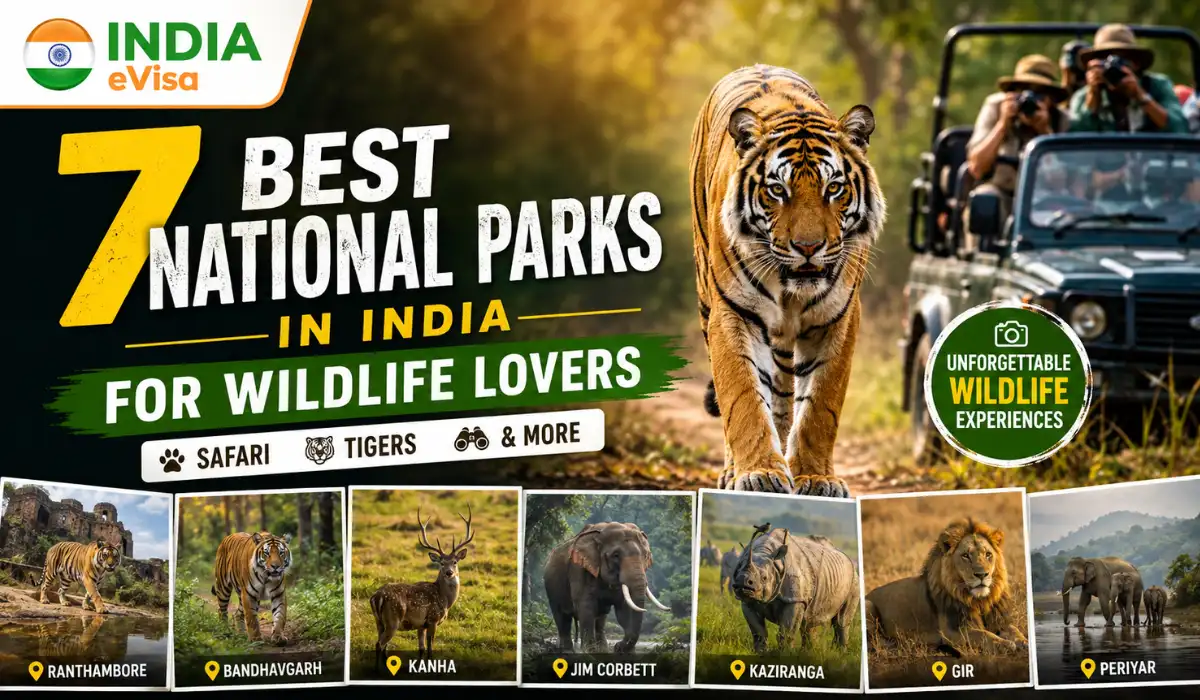
India is a dream destination for anyone who loves wildlife, photography, nature and adventure. From Bengal tigers moving through dry forests to one-horned rhinos grazing in Assam and Asiatic lions roaming Gujarat, the country offers an impressive range of wildlife experiences. Choosing among the Best National Parks in India for Wildlife Lovers can be difficult because every park has its own landscape, animals and safari experience.
Some destinations are ideal for tiger safaris, while others are better for elephants, rhinos, lions, birds or diverse landscapes. In this guide, we explore seven outstanding national parks and explain what makes each one special, what you may see, when to visit and how to plan a better safari. Whether this is your first wildlife trip to India or you are an experienced safari traveller, these parks can help you build an unforgettable itinerary.
Why India Is Perfect for Wildlife Safaris
India’s wildlife is spread across very different ecosystems. You can explore dry deciduous forests in Rajasthan, sal forests in central India, grasslands and wetlands in Assam, and tropical landscapes in Kerala.
Many famous wildlife destinations are also associated with Project Tiger and the wider tiger-reserve network. The National Tiger Conservation Authority currently lists 50 tiger reserves across 18 tiger-range states, showing the scale of India’s tiger conservation landscape.
A safari is not simply about finding a tiger. A good wildlife experience involves watching animal behaviour, understanding the habitat and appreciating species that are often overlooked.
Quick Comparison: 7 Wildlife Parks in India
| National Park | State | Best Known For | Good For |
| Ranthambore | Rajasthan | Bengal tiger, historic ruins | First-time safari travellers |
| Bandhavgarh | Madhya Pradesh | Tigers, forest landscapes | Tiger enthusiasts |
| Kanha | Madhya Pradesh | Tiger, barasingha, forests | Wildlife & nature lovers |
| Jim Corbett | Uttarakhand | Tigers, elephants, birds | Diverse wildlife |
| Kaziranga | Assam | One-horned rhino, elephants | Rhino & bird watching |
| Gir | Gujarat | Asiatic lion | Lion sightings |
| Periyar | Kerala | Elephants, forests, birds | Nature & family trips |
Safari zones, opening dates, timings and permitted activities can change, so always check the relevant forest department or official booking system before travelling.
1. Ranthambore National Park, Rajasthan
Ranthambore is one of the most recognizable wildlife destinations in India. Located in Rajasthan, the park combines dry forests, lakes, rocky terrain and historic ruins, creating a setting that feels very different from the dense jungles of central India.
It is particularly famous for Bengal tigers. The landscape around water bodies can provide excellent opportunities for wildlife observation, while the presence of Ranthambore Fort adds a remarkable historical element to the safari experience. The Ministry of Tourism also highlights the park’s tigers, leopards, sloth bears, hyenas, deer and rich birdlife.
Why wildlife lovers should visit
- Good destination for a classic tiger safari
- Dramatic landscapes for wildlife photography
- Chance to see leopards, sloth bears, deer and birds
- Unique combination of wildlife and heritage
- Convenient addition to a Rajasthan itinerary
Best suited for: First-time wildlife travellers, photographers and visitors combining wildlife with Jaipur or other Rajasthan destinations.
2. Bandhavgarh National Park, Madhya Pradesh
If your main goal is to experience India’s tiger country, Bandhavgarh deserves serious consideration.
The park’s forests, grasslands and rocky terrain create a varied habitat for wildlife. Tigers are the major attraction, but a safari can also reveal leopards, deer and other forest species.
Bandhavgarh also has a strong historical connection through its ancient fort and archaeological remains. India’s tourism portal notes that the area contains caves, inscriptions and rock paintings, adding another dimension to a wildlife trip.
What makes Bandhavgarh special?
The experience is not only about driving around hoping to see a tiger. Skilled guides and naturalists can help visitors interpret alarm calls, tracks, movement and habitat clues.
Best suited for: Travellers who are especially interested in tigers and central India’s forest ecosystems.
3. Kanha National Park, Madhya Pradesh
Kanha is one of the most celebrated wildlife destinations in Madhya Pradesh. Its combination of forests and open meadows creates attractive scenery for safari drives and wildlife photography.
The park is home to Bengal tigers, leopards and wild dogs, but one of its most important conservation stories involves the barasingha. Kanha played a major role in bringing this deer back from the brink of local extinction.
Why choose Kanha?
- Excellent combination of scenery and wildlife
- Important habitat for Bengal tigers
- Famous for barasingha conservation
- Good choice for photographers
- Suitable for travellers who want more than a tiger checklist
Kanha is especially rewarding when you slow down and pay attention to the smaller details—bird calls, deer behaviour, tracks and changes in vegetation.
Best suited for: Serious nature lovers, photographers and travellers looking for a balanced wildlife experience.
4. Jim Corbett National Park, Uttarakhand
Jim Corbett National Park is one of India’s most famous wildlife destinations and a major name in tiger tourism.
Its appeal goes beyond tigers. Elephants, leopards, deer, bears and an impressive variety of birds make Corbett particularly attractive to travellers who want a broader wildlife experience. The Ministry of Tourism describes it as a major birding destination, with hundreds of recorded bird species.
The surrounding Himalayan foothills and riverine landscapes also give Corbett a distinctive character.
What can you expect?
A safari may bring you close to different habitats during the same trip. You might spend one drive watching elephants and another looking for signs of a big cat.
Best suited for: Birdwatchers, families, first-time safari visitors and travellers who want diverse wildlife rather than only tiger sightings.
5. Kaziranga National Park, Assam
Kaziranga is the park to consider if seeing a one-horned rhinoceros is high on your wildlife bucket list.
Located in Assam, Kaziranga is a UNESCO World Heritage Site and is internationally recognized for its greater one-horned rhinoceros population. Its grasslands, wetlands and forests also support elephants, wild water buffalo, swamp deer and many bird species.
The park is also a tiger reserve, making it one of the destinations where you can combine big-cat and large-herbivore viewing.
Why visit Kaziranga?
- Excellent destination for rhino lovers
- Diverse wetland and grassland habitats
- Strong birdwatching opportunities
- Elephants and other large mammals
- Very different landscape from Rajasthan and central India
Best suited for: Photographers, birdwatchers and travellers who want to experience Northeast India’s wildlife.
6. Gir National Park, Gujarat
Gir offers something that most Indian wildlife parks cannot: the opportunity to look for the Asiatic lion in its natural habitat.
Located in Gujarat, Gir is the only natural habitat where the Asiatic lion survives in the wild. The ecosystem includes dry deciduous forests, scrubland and rugged terrain. Besides lions, visitors may encounter leopards, sambar, chital, blackbuck, hyenas, crocodiles and many bird species.
This makes Gir an excellent alternative for wildlife lovers who have already experienced tiger reserves.
Why Gir deserves a place on your list
The park is also an important conservation success story. Protection efforts helped the Asiatic lion recover from a critically low historical population.
Best suited for: Lion enthusiasts, wildlife photographers and travellers exploring Gujarat.
7. Periyar National Park, Kerala
Periyar offers a different kind of wildlife experience in the forests of Kerala.
The protected landscape includes forests, grasslands and waterways and is known for elephants, tigers, leopards, gaurs and sambar deer. It is also an excellent destination for birdwatching, with the Ministry of Tourism reporting more than 265 bird species.
One advantage of Periyar is that wildlife experiences can extend beyond the conventional jeep safari. Depending on current regulations and availability, visitors may have opportunities for guided nature activities and experiences around the reserve.
Why choose Periyar?
- Excellent elephant-watching destination
- Rich birdlife
- Beautiful forest and lake landscapes
- Strong conservation focus
- Good option for combining wildlife with Kerala travel
Best suited for: Families, birdwatchers, nature lovers and travellers visiting Kerala.
Which Indian National Park Is Best for Tigers?
There is no single answer because tiger sightings are never guaranteed.
However, travellers commonly consider Ranthambore, Bandhavgarh, Kanha and Corbett when building a tiger-focused itinerary. All four offer different habitats and safari experiences.
| Your Main Interest | Consider |
| Tiger + historic scenery | Ranthambore |
| Tiger-focused trip | Bandhavgarh |
| Tiger + barasingha + landscapes | Kanha |
| Tiger + elephants + birds | Corbett |
| Rhino + diverse wildlife | Kaziranga |
| Asiatic lion | Gir |
| Elephants + Kerala landscapes | Periyar |
Remember that wildlife is unpredictable. A park with a strong reputation for tiger sightings can still produce a safari where you see no tiger at all. That is part of the experience.
Best Time to Visit India’s National Parks
The ideal season depends on the park and your priorities.
In many tiger reserves, the drier months can make animals easier to observe because vegetation is less dense and wildlife may spend more time around water. However, temperature, park opening schedules and local regulations vary.
For many travellers, October to March offers comfortable weather for wildlife trips, while the hotter months can sometimes provide stronger wildlife-viewing opportunities in parks that remain open.
Before booking, check:
- Park opening and closing dates
- Current safari timings
- Official safari availability
- Weather conditions
- Zone restrictions
- Entry requirements
Do not assume that the same season works equally well for every park.
How to Plan a Wildlife Safari in India
A little planning can make a major difference.
1. Book safaris early
Popular parks can have limited safari slots, particularly during peak travel periods. Reserve through the relevant official system where possible.
2. Choose the right number of safaris
If wildlife is your main reason for visiting, one safari may not be enough.
More drives give you more opportunities to experience changing weather, animal activity and different parts of the habitat.
3. Stay close to the park
A hotel or lodge close to the relevant entrance can reduce travel time and make early-morning safari schedules easier.
4. Carry the right equipment
For photography, consider:
- Camera with a suitable telephoto lens
- Extra batteries
- Memory cards
- Binoculars
- Dust protection for equipment
- Neutral-coloured comfortable clothing
5. Follow your guide’s instructions
Never ask a driver to chase an animal or move too close for a photograph. Responsible tourism protects both visitors and wildlife.
Important Wildlife Safari Tips for First-Time Visitors
A safari is much more enjoyable when expectations are realistic.
Keep these tips in mind:
- Wildlife sightings are never guaranteed.
- Avoid loud conversations inside the vehicle.
- Do not play music or use loud phone sounds.
- Never feed animals.
- Do not litter.
- Avoid strong perfumes.
- Carry water and sun protection.
- Follow park rules at all times.
- Be patient when tracking animals.
- Give wildlife enough space.
The goal should be to observe animals without changing their natural behaviour.
Common Mistakes to Avoid
Choosing a park only because it is famous
The “best” park depends on what you want to see. A tiger enthusiast and a birdwatcher may choose completely different destinations.
Expecting a tiger on every safari
Even the most famous tiger reserves are wild ecosystems. Animals do not follow a tourist schedule.
Booking only one safari
If your budget and schedule allow, multiple drives usually provide a richer experience.
Ignoring travel time
India’s wildlife parks can be far from major airports and cities. Check the complete journey instead of looking only at the safari ticket.
Using unofficial booking websites without checking
Always verify booking rules, fees and safari availability through official sources before making payment.
Expert Advice: How to Choose the Right Park
If this is your first wildlife trip to India, Ranthambore is an easy choice if you also want to explore Rajasthan.
For a tiger-focused holiday, consider central India’s Bandhavgarh or Kanha.
If you want variety, Corbett is a strong option because its wildlife experience extends beyond tigers.
For rhinos, Kaziranga should be high on your list.
For lions, Gir is the obvious choice because of its importance as the wild home of the Asiatic lion.
And if you are already travelling through Kerala, Periyar can add a very different forest experience to your itinerary.
The smartest approach is to choose based on your target species, travel route, season and available safari time—not simply online popularity.
Travel Documents for International Wildlife Travellers
International visitors should also plan their entry documents before building a wildlife itinerary.
If you are travelling to India from another country, check the applicable requirements and complete your India Visa Online application through the appropriate official channel.
Visa charges can vary depending on nationality, visa category and validity. Always verify the current India Visa Fees before making travel arrangements because fee schedules can change.
Once your travel documents are sorted, you can focus on the more enjoyable part of the trip—choosing parks, planning safaris and preparing your camera.
Frequently Asked Questions
1. Which is the best national park in India for tiger sightings?
Ranthambore, Bandhavgarh, Kanha and Corbett are among the most popular choices for tiger-focused wildlife trips. However, no national park can guarantee a tiger sighting.
2. Which national park is best for seeing lions in India?
Gir National Park in Gujarat is the key destination for seeing Asiatic lions in the wild. It is the species’ primary natural habitat.
3. Where can I see one-horned rhinoceros in India?
Kaziranga National Park in Assam is one of India’s premier destinations for the greater one-horned rhinoceros and is internationally known for its conservation of the species.
4. How many safaris should I take in India?
There is no fixed number, but two or more safari drives can give you a better opportunity to experience different conditions and wildlife behaviour than a single drive.
5. What should I carry on an Indian wildlife safari?
Carry comfortable clothing, sunscreen, water, binoculars and a camera with spare batteries and memory cards. A telephoto lens is particularly useful for wildlife photography.
Conclusion
India’s wildlife parks offer far more than a chance to photograph a tiger. They bring together forests, grasslands, wetlands, mountains, rivers and some of the country’s most remarkable animals.
The Best National Parks in India for Wildlife Lovers depend on what you want from your journey. Choose Ranthambore for tigers and heritage, Bandhavgarh or Kanha for central Indian tiger country, Corbett for diverse wildlife, Kaziranga for rhinos, Gir for Asiatic lions and Periyar for elephants and Kerala’s forest landscapes.
Most importantly, travel with patience and respect for nature. A responsible safari is not measured only by how many animals you photograph, but by how well you experience and protect the wild places you visit.