
 By India VisaCategories Foods
 Regional Foods in India: Dishes That Tell the Story of a Nation
By India VisaCategories Foods 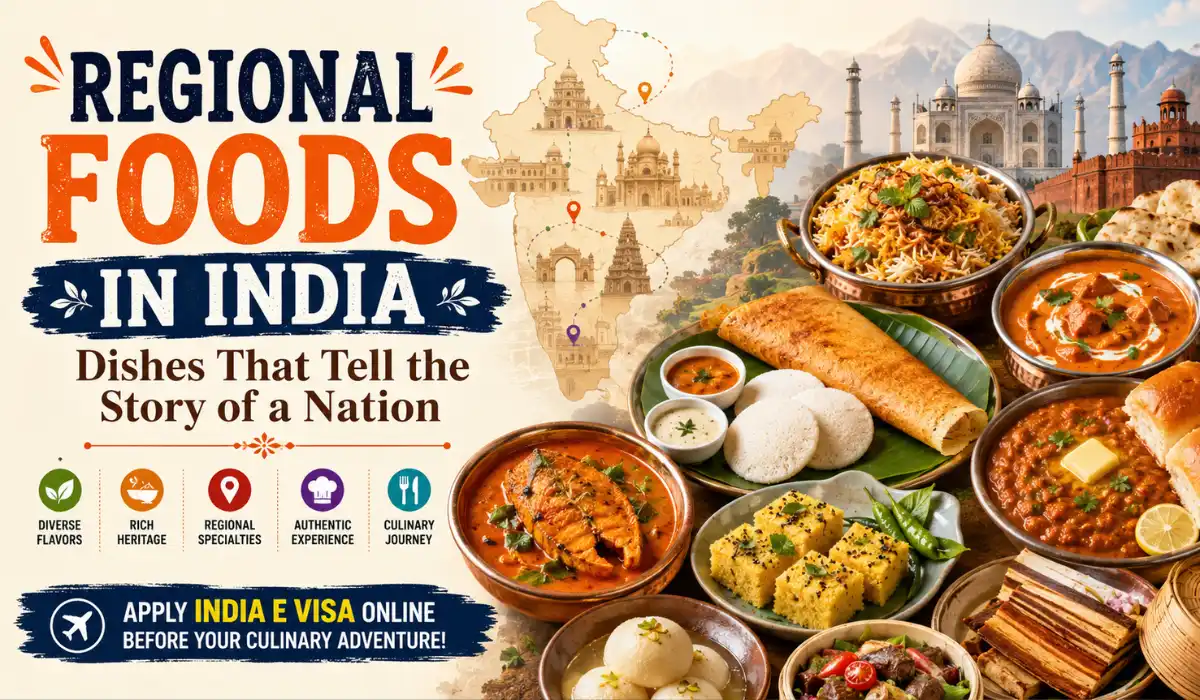
India is a land of incredible diversity, and nowhere is that diversity more evident than in its food. From the snow-covered Himalayan regions to the tropical coasts of the south, every part of the country has developed its own unique culinary traditions. These regional foods in India are more than just meals—they reflect history, geography, culture, and local lifestyles.
For travelers, exploring regional Indian cuisine is one of the best ways to understand the country’s rich heritage. Each dish tells a story of migration, trade, agriculture, climate, and tradition. Whether you’re a food enthusiast or a first-time visitor, discovering India’s regional specialties can become one of the most memorable parts of your journey. Before planning your culinary adventure, make sure to apply online India visa and prepare your travel documents in advance.
Why Regional Foods Matter in India
India’s cuisine cannot be defined by a single dish or flavor profile. The country’s vast size and cultural diversity have resulted in hundreds of regional cooking styles.
Factors that influence regional foods in India include:
- Local ingredients
- Climate conditions
- Religious traditions
- Historical influences
- Agricultural practices
- Cultural customs
As a result, a meal enjoyed in northern India can be completely different from one served in the south, east, or west.
North India: Rich Flavors and Hearty Meals
Northern India is known for its rich gravies, breads, and dairy-based dishes.
Popular Regional Foods
Butter Chicken
Originating from Delhi, this famous dish has become popular worldwide.
Amritsari Kulcha
A stuffed bread specialty from Amritsar.
Rogan Josh
A traditional meat dish associated with the beautiful region of Jammu and Kashmir.
These dishes reflect centuries of cultural exchanges and culinary innovation.
South India: A Celebration of Rice and Spices
Southern India offers a completely different culinary experience.
Famous Foods from South India
Dosa
A thin rice-based crepe enjoyed throughout southern states.
Idli
Steamed rice cakes often served for breakfast.
Appam and Stew
A traditional combination from Kerala.
Hyderabadi Biryani
One of the most celebrated dishes from Hyderabad.
South Indian cuisine highlights the importance of rice, coconut, and aromatic spices.
East India: Tradition and Sweet Delights
Eastern India is known for its seafood, rice dishes, and world-famous desserts.
Signature Regional Foods
Fish Curry
A staple in West Bengal.
Pakhala Bhata
A fermented rice dish popular in Odisha.
Rasgulla
One of India’s most beloved sweets.
The food of eastern India reflects the region’s rivers, fertile lands, and cultural traditions.
West India: Diverse Flavors and Unique Traditions
Western India includes a variety of cuisines shaped by geography and history.
Must-Try Foods
Dhokla
A light and savory dish from Gujarat.
Undhiyu
A traditional mixed vegetable preparation.
Pav Bhaji
A famous street food originating in Mumbai.
Bebinca
A layered dessert associated with Goa.
These dishes showcase the rich diversity of western India’s culinary landscape.
Northeast India: Hidden Culinary Treasures
The northeastern states offer some of the most unique regional foods in India.
Local Specialties
Bamboo Shoot Curry
Popular in several northeastern states.
Akhuni
A traditional fermented soybean preparation from Nagaland.
Smoked Meats
Widely enjoyed across the region.
The cuisine of Northeast India remains one of the country’s most fascinating and least explored food traditions.
How Food Reflects India’s History
Many dishes in regional Indian cuisine tell stories of historical influences.
Trade Routes
Spices, ingredients, and cooking techniques traveled through ancient trade networks.
Royal Kitchens
Many famous dishes were developed in royal courts and later became popular across the country.
Cultural Exchange
Foreign influences blended with local traditions to create unique culinary identities.
This rich history continues to shape Indian food today.
Food Tourism in India Is Growing
International travelers are increasingly choosing India for its culinary experiences.
Reasons include:
- Diverse regional cuisines
- Authentic cultural experiences
- Traditional cooking methods
- Affordable dining options
- Rich culinary heritage
Food tourism allows visitors to experience India beyond its famous monuments and attractions.
Tips for Exploring Regional Foods in India
To fully enjoy India’s food culture:
Try local specialties in each region.
Visit traditional markets.
Explore family-run restaurants.
Learn about local ingredients.
Respect regional dining customs.
Apply online India visa before planning your journey.
Apply India e Visa Online Before Your Culinary Journey
International visitors interested in exploring regional foods in India should ensure all travel requirements are completed before departure.
Eligible travelers can apply India e visa online and complete the visa process conveniently before their trip.
Preparing your visa in advance allows you to focus on discovering India’s incredible food culture without unnecessary travel concerns.
Why Regional Foods Tell India’s Story
Every dish in India represents more than flavor. It reflects local traditions, historical influences, environmental conditions, and cultural identity.
From the biryanis of Hyderabad and the seafood of Kerala to the sweets of Bengal and the unique dishes of Northeast India, each region contributes to the story of India’s culinary heritage.
Exploring these foods offers travelers a deeper understanding of the country and its people.
Final Thoughts
The diversity of regional foods in India is one of the country’s greatest treasures. Every region has developed unique dishes that reflect its culture, history, and way of life.
Whether you’re enjoying a traditional meal in Punjab, tasting seafood along the Kerala coast, or discovering hidden culinary gems in Northeast India, each experience reveals a different chapter of India’s story.
Before embarking on your culinary adventure, remember to apply online India visa or apply India e visa online if eligible, and prepare to discover the remarkable flavors that make India one of the world’s most exciting food destinations.