
 By India VisaCategories Festivals
 Traditional Harvest Festivals Across India: Celebrating Culture, Gratitude, and Prosperity
By India VisaCategories Festivals 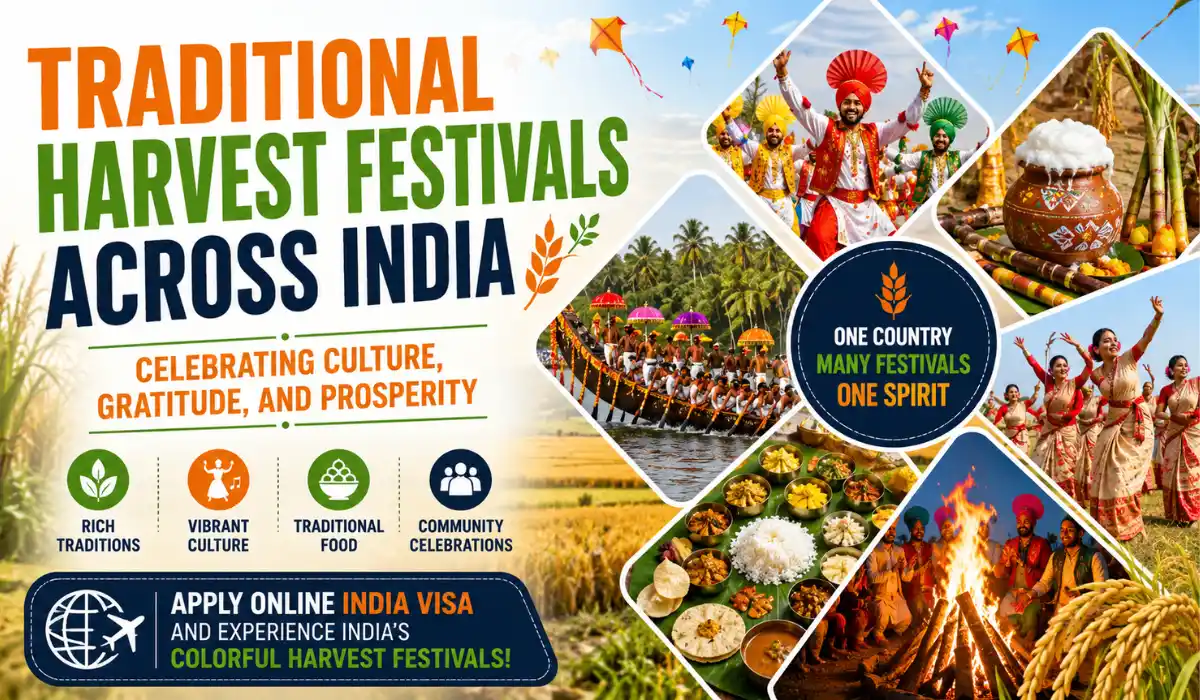
India is an agricultural nation where farming has shaped communities, traditions, and celebrations for centuries. Across the country, different regions mark the harvest season with vibrant festivals that express gratitude for a successful crop, honor nature, and bring families together. These harvest festivals in India are among the most colorful cultural celebrations and offer visitors a unique opportunity to experience authentic local traditions.
From the fields of Punjab to the villages of Tamil Nadu and the backwaters of Kerala, every state celebrates the harvest season in its own special way. These festivals feature traditional food, music, dance, religious rituals, and community gatherings that reflect the diversity of India’s cultural heritage.
For international travelers looking to experience India’s rich traditions, attending these traditional harvest festivals in India can be an unforgettable cultural journey. Before planning your visit, remember to apply online India visa and complete the necessary travel requirements.
Why Harvest Festivals Are Important in India
Agriculture remains an important part of India’s economy and culture. Harvest festivals are celebrated to thank nature, the land, and the farming communities that contribute to the country’s prosperity.
These festivals often symbolize:
- Gratitude for a successful harvest
- New beginnings
- Community unity
- Cultural heritage
- Religious devotion
- Seasonal change
Because India has diverse climates and farming cycles, harvest celebrations occur throughout the year in different regions.
1. Pongal – Tamil Nadu’s Harvest Celebration
Pongal is one of the most important harvest festivals in India.
Celebrated in January, Pongal marks the end of the winter solstice and the beginning of the harvest season.
Key Highlights
- Preparation of the traditional Pongal dish
- Decorative rangoli designs
- Worship of the Sun God
- Community gatherings
- Cultural performances
The festival typically lasts four days and is deeply connected to agricultural traditions.
2. Makar Sankranti – Celebrated Across India
Makar Sankranti is observed in many states under different names.
Popular Traditions
- Kite flying festivals
- River bathing ceremonies
- Traditional sweets
- Family gatherings
States such as Gujarat, Maharashtra, Uttar Pradesh, and Rajasthan celebrate the festival with unique local customs.
3. Baisakhi – Punjab’s Festival of Prosperity
Baisakhi is one of the most vibrant Indian harvest festivals.
Celebrated in April, Baisakhi marks the wheat harvest season in Punjab.
Festival Attractions
- Traditional Bhangra performances
- Folk music
- Community feasts
- Cultural fairs
The festival is both an agricultural celebration and an important event in Sikh culture.
4. Onam – Kerala’s Grand Harvest Festival
Onam is among the most famous festivals in southern India.
Why Visitors Love Onam
- Traditional floral decorations
- Snake boat races
- Cultural performances
- Elaborate feasts known as Onam Sadya
The festival celebrates prosperity, tradition, and the legendary King Mahabali.
5. Nuakhai – Odisha’s Agricultural Festival
Nuakhai is a major agricultural celebration in eastern India.
Key Customs
- Offering newly harvested crops
- Family reunions
- Traditional dances
- Community celebrations
Nuakhai reflects the close connection between farming and local culture.
6. Magh Bihu – Assam’s Harvest Festival
Magh Bihu marks the completion of the harvesting season.
Festival Highlights
- Community feasts
- Traditional Assamese cuisine
- Bonfires
- Folk music and dance
The celebration showcases the rich cultural heritage of Northeast India.
7. Lohri – A Festival of Winter Harvest
Lohri is particularly popular in Punjab and neighboring regions.
Traditional Activities
- Bonfire celebrations
- Folk songs
- Traditional dances
- Sharing sweets and snacks
Lohri is often associated with gratitude, prosperity, and new beginnings.
8. Nabanna – West Bengal’s Harvest Tradition
Nabanna celebrates the arrival of newly harvested rice.
Cultural Importance
- Preparation of rice-based dishes
- Community gatherings
- Local cultural programs
- Traditional rituals
The festival highlights the importance of rice cultivation in the region.
Cultural Diversity Through Harvest Festivals
One of the most fascinating aspects of traditional harvest festivals in India is how each region celebrates differently while sharing a common theme of gratitude and prosperity.
These celebrations showcase:
- Regional traditions
- Local food culture
- Folk music
- Traditional attire
- Agricultural heritage
Together, they represent the incredible diversity that defines India.
Traditional Foods Served During Harvest Festivals
Food plays a central role in every harvest celebration.
Popular festival dishes include:
Pongal
A rice-based dish prepared during Pongal celebrations.
Tilgul
A sweet sesame preparation associated with Makar Sankranti.
Sarson Ka Saag and Makki Ki Roti
Traditional foods enjoyed during Baisakhi.
Onam Sadya
A grand vegetarian feast served during Onam.
These foods help preserve culinary traditions passed down through generations.
Why International Travelers Should Experience Harvest Festivals
Attending harvest festivals in India offers travelers a unique perspective on Indian culture.
Benefits include:
- Authentic cultural experiences
- Traditional food tasting
- Local community interaction
- Cultural photography opportunities
- Exposure to regional customs
Unlike typical tourist attractions, harvest festivals provide a deeper connection to local life and traditions.
Travel Tips for Festival Visitors
If you plan to attend a harvest festival in India:
- Check festival dates in advance.
- Book accommodation early.
- Respect local customs and traditions.
- Try regional festival foods.
- Participate in cultural activities where appropriate.
- Apply online India visa before finalizing travel plans.
Apply India e Visa Online Before Visiting India
Many international travelers visit India specifically to experience cultural celebrations and regional festivals.
Eligible visitors can apply India e visa online before departure and complete the necessary travel requirements from their home country.
Applying early helps ensure a smoother travel experience and allows you to focus on enjoying India’s remarkable cultural heritage.
Harvest Festivals and India’s Cultural Identity
The various Indian harvest festivals celebrated throughout the country reflect the deep relationship between people, nature, and agriculture. These festivals preserve centuries-old traditions while bringing communities together in celebration and gratitude.
Whether it’s the colorful kites of Makar Sankranti, the vibrant dances of Baisakhi, the grand feasts of Onam, or the community gatherings of Magh Bihu, each festival tells a unique story about India’s cultural identity.
Final Thoughts
The harvest festivals in India offer some of the most authentic and meaningful cultural experiences available to travelers. These celebrations showcase the country’s agricultural heritage, regional diversity, and enduring traditions. For visitors seeking to explore India’s culture beyond its famous landmarks, harvest festivals provide a memorable opportunity to witness local customs, enjoy traditional food, and connect with communities across the country. Before your journey, remember to apply online India visa or apply India e visa online if eligible and prepare to experience some of India’s most cherished celebrations.