
 By India VisaCategories Uncategorized
 North India vs South India Temples and Heritage Sites to Explore
By India VisaCategories Uncategorized 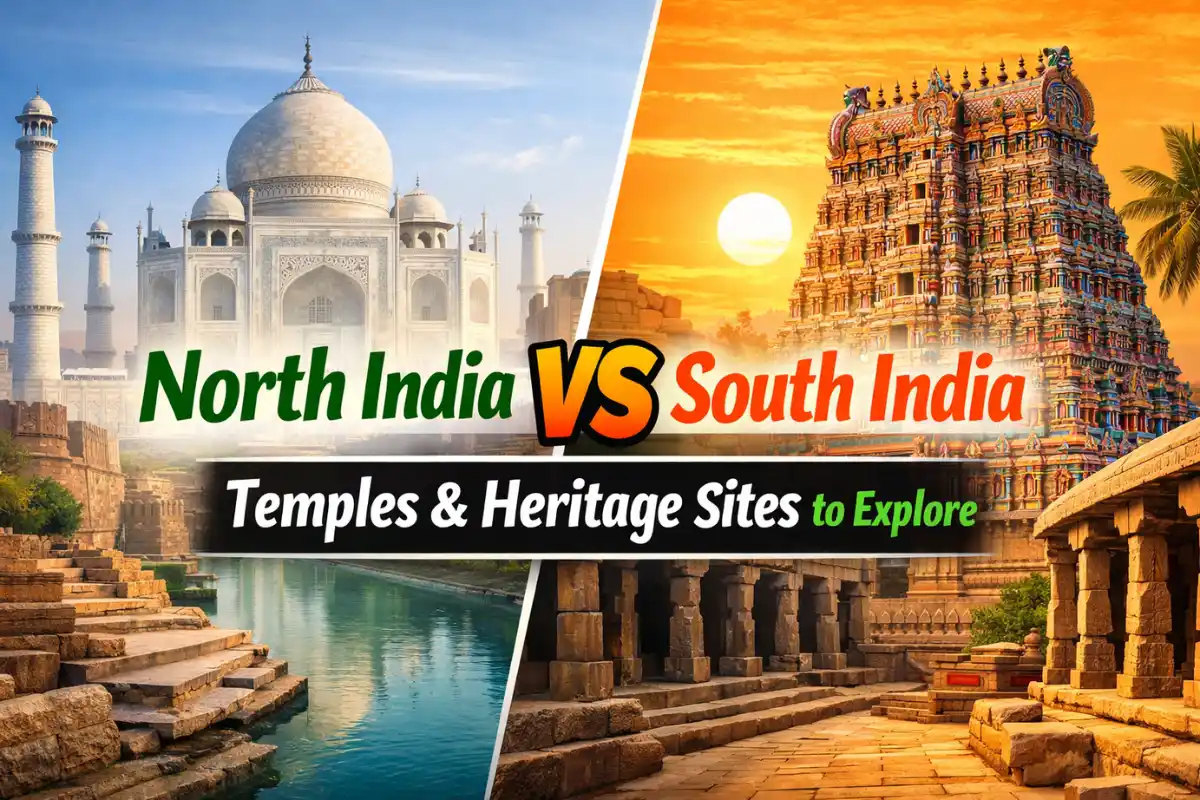
India is rich in history, culture, and sacred sites. When travelers compare North India vs South India, they often focus on temples, forts, and old cities. Both regions offer unique architecture, stories, and spiritual energy. In the north, expect grand forts, marble temples, and Mughal heritage. In the south, you’ll find ancient stone temples, carved pillars, and long temple festivals. This guide will help you explore the top temples and heritage sites in both regions, give practical travel tips, and point you to helpful resources like India Visa Online and India Visa Information so planning is easy.
Why compare North India vs South India temples?
Comparing North India vs South India helps you choose a travel theme: history, spirituality, architecture, or festivals. Each region tells a different story through its buildings and rituals.
Top Temples & Heritage Sites in North India
1. Golden Temple, Amritsar
A major Sikh pilgrimage, known for its gold-plated sanctum and peaceful sarovar.
2. Kashi Vishwanath, Varanasi
One of Hinduism’s oldest and most sacred temples, near the Ganges ghats.
3. Khajuraho Group of Monuments
Famous for intricate sculptures and UNESCO World Heritage status.
4. Taj Mahal (Agra) — heritage beauty
Although primarily a mausoleum, it is a key part of northern heritage and architecture.
Quick tips for North India sites
- Visit early morning to avoid crowds.
- Dress respectfully at religious sites.
- Carry small cash for offerings and local transport.
Top Temples & Heritage Sites in South India
1. Meenakshi Amman Temple, Madurai
A colorful, large temple complex with towering gopurams and lively festivals.
2. Brihadeeswarar Temple, Thanjavur
A Chola-era masterpiece made of granite — a World Heritage Site.
3. Hampi Group of Monuments
Ancient Vijayanagara capital with giant stone structures and boulder landscapes.
4. Rameswaram and the Ramanathaswamy Temple
A sacred pilgrimage site with long corridors and ancient mythology.
Quick tips for South India sites
- Check festival dates — they can add magic to your visit.
- Stay hydrated; many southern sites are warm year-round.
- Remove shoes where required and follow local customs.
Architecture: A simple comparison
North India
- Mughal domes, marble work, and forts.
- Tall shikhara towers in many Hindu temples.
South India
- Dravidian gopurams (ornate gateway towers).
- Carved stone pillars and monolithic structures.
This short comparison shows the visual contrast of North India vs South India architecture.
Benefits of visiting temples and heritage sites
- Deep cultural learning and spiritual experiences.
- Stunning photography and architecture study.
- Support for local communities and artisans.
- Easy to combine with local cuisine and markets.
Practical Travel Tips
- Plan an itinerary: prioritize must-see sites.
- Book tickets early for popular landmarks.
- Use local guides for richer stories.
- Check visa rules and travel docs on India Visa Online and India Visa Information before you go.
Common mistakes travelers make
- Not checking opening hours — some temples close mid-day.
- Wearing inappropriate clothing — always carry a shawl or scarf.
- Missing festival dates — you may miss cultural highlights or face closures.
- Overpacking one region’s experience — don’t expect every temple to be the same when comparing North India vs South India.
Expert advice for first-time visitors
- Spend more time in fewer places; depth beats speed.
- Learn a few local phrases; people appreciate the effort.
- Hire licensed guides for heritage sites to avoid myths and get factual history.
- Respect rituals and photography rules — some inner sanctums forbid photos.
Suggested 7-day itineraries (two quick ideas)
North India (7 days)
- Delhi – Red Fort & Lotus Temple
- Agra – Taj Mahal & Agra Fort
- Varanasi – Ganges, Kashi Vishwanath
- Khajuraho – temples and sculptures
South India (7 days)
- Chennai – Kapaleeshwarar Temple
- Mahabalipuram – Shore Temple
- Thanjavur – Brihadeeswarar Temple
- Madurai – Meenakshi Amman Temple
Both itineraries help you compare North India vs South India experiences in a short time.
FAQ (Frequently Asked Questions)
Q1: Which region has older temples — North India or South India?
A: Many of the oldest continuous temple traditions are in the south, but both regions have ancient sites. It depends on which era you look at.
Q2: Is it safe to visit temples as a foreign traveler?
A: Yes. Follow common-sense safety, respect local rules, and travel during daylight hours.
Q3: Do I need a visa to visit these sites?
A: Most foreign travelers need a visa. Check India Visa Online and India Visa Information for requirements.
Q4: Can I photograph inside temples?
A: Rules vary. Many inner sanctums forbid photography. Always ask or look for signs.
Q5: What’s the best time of year to compare North India vs South India?
A: October to March is generally pleasant for both regions, though southern sites can be visited year-round.
Conclusion
Exploring North India vs South India temples and heritage sites is a rewarding journey. Each region offers different art, history, and spiritual rhythms. Plan carefully, respect customs, and use reliable resources like India Visa Online and India Visa Information to sort visas and travel rules. Whether you love carved stone, palace gardens, or temple festivals, India’s north and south will leave you inspired.